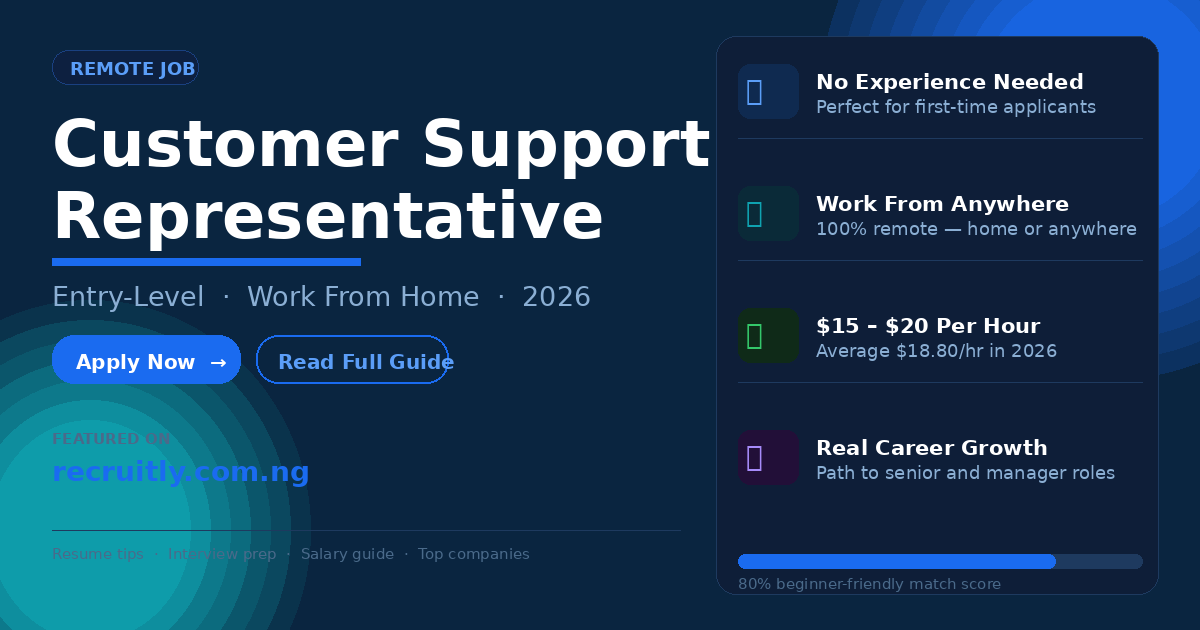
Customer Support Representative Entry-Level Remote Job: The Complete Guide to Getting Hired in 2026

If you’ve been searching for a customer support representative entry-level remote job and feeling overwhelmed by vague job listings and zero guidance, you’re in the right place. This guide breaks everything down — what the job actually involves, what you need to get hired, how much you’ll earn, and exactly how to land your first offer even if you’ve never worked in customer service before.
Let’s get into it.
What Is a Customer Support Representative Entry-Level Remote Job?
A customer support representative entry-level remote job is exactly what it sounds like — you help customers solve problems, answer their questions, and make sure they leave the interaction satisfied. And you do all of that from home.
You don’t need years of experience. You don’t need a degree from a prestigious university. Most companies that hire for these roles are willing to train you from scratch, provided you can communicate clearly, stay patient under pressure, and show up consistently.
The “entry-level” part means you’re starting at the beginning. That’s not a weakness — it’s the gateway into one of the most transferable careers in the remote work world.
How It Differs From In-Office Customer Service
The core responsibilities are the same whether you’re sitting in a call centre or at your kitchen table. But remote customer support comes with its own unique rhythm. You’re managing your own schedule, staying motivated without a manager walking past your desk, and relying entirely on digital tools to communicate with both customers and your team.
It requires self-discipline that an office environment doesn’t demand in the same way. But for people who thrive working independently, it’s a genuinely excellent fit.
Types of Customer Support Channels You’ll Work On
Different companies use different communication channels, and most entry-level roles will focus on one or two of these:
- Live chat support — responding to customers in real time via a website chat widget
- Email support — handling written enquiries with longer turnaround times
- Phone support — voice calls where tone and patience matter most
- Social media support — responding to customer comments and DMs on platforms like Twitter/X, Facebook, or Instagram
- Ticket-based support — working through a helpdesk system like Zendesk or Freshdesk to resolve customer issues in order of priority
Some roles will combine two or three of these. The job listing will always specify which channels you’ll be working on, so read carefully before applying.
What Does a Remote Customer Support Rep Actually Do Every Day?
People assume it’s simple. And in some ways it is — but there’s more to it than just answering questions.
Morning Routine of a Remote Support Agent
A typical day might start with logging into your company’s helpdesk system, checking your queue of unresolved tickets from the previous shift, and reviewing any overnight emails or chat logs that need follow-up. Many teams have a short morning standup via video call — usually 10 to 15 minutes — where the team syncs up on any product updates, known issues, or priorities for the day.
After that, you’re working through your queue. Responding to customers, escalating complex issues to senior team members, updating internal notes, and closing resolved tickets.
Tasks You’ll Handle From Your Home Office
On any given day as an entry-level remote customer support rep, you might:
- Answer questions about a company’s product or service
- Help a customer reset their password or navigate a technical issue
- Process a refund, replacement, or order change
- Document customer feedback and log issues in a CRM system
- Follow up with customers on previously opened cases
- Escalate issues that require specialist knowledge or manager approval
It’s varied, it moves quickly, and no two days are exactly the same.
Skills You Need to Land This Job Even With Zero Experience
Here’s the good news: you almost certainly already have some of these skills. You just haven’t framed them the right way on your resume yet.
Communication Skills That Get You Hired
Clear written and verbal communication is the single most important skill in customer support. You don’t need to sound like a corporate robot — you just need to be clear, warm, and easy to understand. Companies want someone who can explain a complicated issue in plain language without making the customer feel stupid.
If you’ve ever written emails for a previous job, tutored someone, worked in retail, or even managed a group project — you’ve been practising communication skills. Those count.
Technical Skills Employers Look For
You don’t need to be a developer. But basic technical comfort is expected. Most companies will want you to:
- Type at a reasonable speed (40+ words per minute is a solid baseline)
- Navigate multiple browser tabs and applications at once
- Learn company-specific tools quickly (most will train you)
- Be comfortable with software like Google Workspace, Microsoft Office, Slack, and Zoom
- Understand how to use a CRM or helpdesk system — or be willing to learn one
Soft Skills That Make You Stand Out
These are the qualities that separate good customer support reps from great ones:
- Patience — some customers are frustrated before they even start typing
- Empathy — the ability to genuinely acknowledge someone’s frustration without taking it personally
- Problem-solving — thinking on your feet when the standard answer doesn’t apply
- Attention to detail — missing a small detail in a customer’s message can lead to the wrong solution
- Resilience — handling a high volume of interactions without burning out
Qualifications and Requirements for Entry-Level Remote Support Roles
Most entry-level remote customer support jobs have relatively straightforward requirements. Here’s what you’ll typically see on a job listing.
Education Requirements
The majority of companies require a high school diploma or its equivalent. Some roles in healthcare, finance, or legal tech may ask for an associate degree or some college education. But for most mainstream customer support positions — e-commerce, SaaS, travel, retail — a degree is not mandatory.
What matters far more is your ability to communicate professionally and learn quickly.
Equipment and Internet Setup You’ll Need at Home
This is something most guides skip over, but it’s genuinely important. Before you apply for remote customer support roles, make sure you have:
- A reliable laptop or desktop computer (most companies specify Windows or Mac requirements)
- A stable internet connection — ideally wired ethernet rather than Wi-Fi for voice support roles
- A quality headset with a microphone if the role involves phone or video calls
- A quiet workspace — background noise is unprofessional on calls and can get you flagged in quality reviews
- A backup internet option if your primary connection is unreliable
Some companies will send you equipment. Most entry-level remote roles expect you to have your own. Check the job listing carefully.
How Much Does an Entry-Level Remote Customer Support Rep Earn?
Let’s talk money, because this is one of the things most job guides gloss over.
Hourly Pay vs Annual Salary Breakdown
According to current salary data, the average hourly pay for a remote customer support representative in the United States sits around $18.80 per hour as of 2026. Entry-level positions typically start between $15 and $17 per hour, with the 75th percentile reaching around $20 per hour for more experienced or specialised support roles.
Annually, that translates to roughly:
- Starting salary: $30,000 — $35,000 per year
- Mid-range: $36,000 — $42,000 per year
- Senior entry-level or specialised: $45,000+ per year
For international applicants working for US-based companies, rates can vary significantly based on the company’s pay structure and your location.
Which Industries Pay the Most
Not all customer support jobs pay the same. If you want to earn at the higher end of the entry-level range, target these industries:
- SaaS and technology companies — they tend to pay above average and offer strong benefits
- Financial services and fintech — higher responsibility but better compensation
- Healthcare technology — growing rapidly and often pays a premium
- E-commerce and logistics — high volume but competitive salaries at scale
Top Companies Hiring Entry-Level Remote Customer Support Reps in 2026
Big Brand Companies With Remote Support Teams
Several large companies are consistently known for hiring entry-level remote customer support staff. These include Amazon, Apple, Chewy, Concentrix, TTEC, Teleperformance, Hilton, and American Express. These companies tend to have structured onboarding, clear training programmes, and established remote work infrastructure — making them great starting points for first-time remote workers.
Startups and Tech Companies Worth Applying To
Smaller tech companies and startups can be excellent places to start because the roles are often more varied, you’ll learn faster, and promotions can come more quickly. Look out for companies in the SaaS, e-learning, fintech, and health tech spaces listing customer support roles on platforms like LinkedIn, We Work Remotely, Remote.co, and AngelList.
How to Apply for a Customer Support Representative Entry-Level Remote Job Step by Step
How to Write a Resume With No Experience
Don’t let a blank work history stop you. Here’s how to frame a resume for customer support when you’re starting from scratch:
Lead with a strong summary statement. Two to three sentences that describe who you are, what skills you bring, and what kind of role you’re targeting. Keep it specific and confident.
List any experience involving communication, even if it wasn’t a formal job. Volunteer work, freelance projects, campus organisations, retail shifts, tutoring — anything where you helped people solve problems or communicated regularly counts.
Include a skills section. List your technical skills (tools you know, typing speed, software familiarity) and your soft skills. Keep it honest.
Add any certifications. Free courses from Google, HubSpot, Coursera, or LinkedIn Learning on customer service fundamentals can genuinely strengthen a thin resume.
How to Write a Cover Letter That Gets Read
Keep it short — three paragraphs maximum. Open by naming the specific role and why you want it. Use the middle paragraph to connect one or two specific skills to the job requirements. Close by expressing genuine enthusiasm and asking for the opportunity to speak further.
Don’t use a template letter. Hiring managers read hundreds of them. Write something that sounds like you wrote it this morning specifically for this company.
Common Mistakes to Avoid During the Application
- Applying to dozens of roles with an identical, generic resume
- Not tailoring your cover letter to each specific company
- Ignoring the technical requirements (wrong equipment, wrong location, ineligible time zone)
- Missing keywords from the job description in your resume
- Following up too aggressively — or not following up at all
How to Ace the Remote Customer Support Interview
Common Interview Questions and How to Answer Them
These are the questions you’re almost certain to face in a customer support interview. Prepare for all of them:
“Tell me about a time you dealt with a difficult person.” Focus on your process — how you stayed calm, listened actively, and found a resolution. The outcome matters less than your approach.
“How do you prioritise tasks when everything feels urgent?” Show that you understand the difference between urgency and importance, and that you have a system — even a simple one.
“What does great customer service mean to you?” Be specific. Don’t say “going above and beyond.” Say something like: “It means making the customer feel heard before jumping to a solution, then following through until the issue is fully resolved.”
“How do you stay motivated working from home?” Be honest but positive. Talk about your workspace setup, your routine, and how you hold yourself accountable.
How to Do a Video Interview Like a Pro
Remote support roles almost always involve a video interview. Make sure:
- Your background is clean and professional — or use a neutral virtual background
- Your lighting is good (face a window or use a ring light)
- Your internet connection is stable
- You’re dressed professionally from the waist up at minimum
- You’ve tested your camera and microphone at least an hour before the interview
Log on five minutes early. Technical issues during a remote interview for a remote job are particularly hard to recover from.
Career Growth Path After Your First Remote Support Job
A customer support representative entry-level remote job isn’t just a starting point — it’s the foundation for a genuinely strong career trajectory.
Where You Can Go From Here
Most customer support reps who stay consistent and perform well can move into:
- Senior Customer Support Representative — typically within 12 to 18 months
- Team Lead or Supervisor — managing a small group of support agents
- Quality Assurance Analyst — reviewing support interactions for consistency and quality
- Customer Success Manager — a more strategic, relationship-focused role with higher pay
- Product Specialist — using your frontline knowledge to inform product development
- Operations or Training roles — designing the onboarding and training programmes you went through yourself
The skills you build in customer support — communication, problem-solving, CRM proficiency, empathy, and resilience — transfer directly into sales, operations, product, and management careers. It’s one of the most versatile starting points in the remote work world.
Frequently Asked Questions
What does a remote customer support representative do? A remote customer support representative helps customers resolve issues, answer questions, and navigate products or services — all from a home office using digital communication channels like email, live chat, phone, or social media.
Can I get a remote customer support job with no experience? Yes. Many entry-level remote customer support roles require no prior experience. Companies typically provide training. What they look for instead is strong communication skills, a reliable internet connection, and a willingness to learn.
What equipment do I need for a remote customer service job? You’ll generally need a laptop or desktop computer, a stable internet connection, a headset with microphone (for phone or video roles), and a quiet workspace. Some companies provide equipment — check the job listing to be sure.
How much do entry-level remote customer support reps earn? Entry-level remote customer support roles in the US typically pay between $15 and $20 per hour, with an average of around $18.80 per hour as of 2026. Annual salaries for full-time positions generally range from $30,000 to $42,000 depending on the company and industry.
How long does it take to get hired for a remote customer support job? The hiring process typically takes two to five weeks from application to offer. Some companies move faster — particularly high-volume hiring operations. The process usually involves a resume screening, a video interview, and sometimes a short written assessment or typing test.
Is customer support a good career to start remotely? Absolutely. It’s one of the most accessible entry points into remote work, with clear career progression, transferable skills, and growing demand across industries. It’s a smart first step for anyone building a long-term remote career.
What skills should I highlight on my resume for a customer support job? Focus on communication skills, patience, problem-solving, any CRM or helpdesk software you’ve used, typing speed, and any experience involving helping or serving people — even in non-professional settings.
Do I need a degree to get an entry-level remote customer support job? Most entry-level remote customer support roles require only a high school diploma or equivalent. A degree is rarely mandatory, though it may give you a slight edge in more specialised industries like healthcare or finance.